


Engineering and Design Solutions
REGULUS provides electronic engineering and design solutions, transforming product concepts into market-ready electronics. Our services cover electronic and mechanical design, PCB assembly, box build integration, and NPI, ensuring prototype validation, manufacturing preparation, and scalable production.
Electronic Engineering Services for Product Design and Manufacturing
REGULUS provides electronic engineering and design solutions for electronics manufacturing projects, including:
-
PCB layout & components placement
-
Mechanical design & engineering
-
Technologies & materials selection
-
Design proofing & prototyping
-
Cable & harness assembly
-
System integration
Whether you have an early product concept or an existing product design, we can develop, analyze, validate, and prepare your product for prototype builds, New Product Introduction (NPI), manufacturing preparation, and scalable production.
Our role is to connect design decisions with real manufacturing conditions. For products that require electro-mechanical assembly, we evaluate how PCBA, enclosures, cables, connectors, modules, displays, batteries, fasteners, and internal structures work together as part of box build assembly. This product-level integration helps your team confirm that the design can be assembled, tested, and prepared for production.
Engineering Workflow from Concept or Existing Design to Manufacturing
REGULUS organizes each project around your product stage, available technical information, and manufacturing goals. Before a formal engineering or manufacturing project begins, we review your initial inquiry, Product Survey information, concept requirements, or existing design files to define the next practical step. Once the project scope is aligned and approved, your team can move from early requirements or existing design files through electronic design, mechanical design, design analysis, verification, NPI preparation, PCBA, and box build assembly production.

We first review your product function, application environment, project stage, available technical information, production goals, testing needs, and expected manufacturing scope. This step clarifies whether a concept-stage project is ready for electronic and mechanical design development, or whether an existing design has enough files, BOM data, drawings, samples, and test requirements for preliminary evaluation.
If you only have a product concept, we develop the electronic design, mechanical design, initial BOM, material direction, and manufacturing feasibility plan. If your team already has design files, this step may not be required.
We review design files, BOM, electronic architecture, mechanical configuration, Design for Manufacturing (DFM) conditions, and testability requirements. This step confirms whether the design is ready for prototype build and engineering validation.
We build and validate prototype samples to confirm electronic performance, mechanical fit, electro-mechanical integration, functional behavior, and system-level requirements. Prototype build is used for design verification, not mass production.
After prototype validation, we move the project into NPI and manufacturing preparation. This includes trial run, process validation, production documentation, quality checkpoints, material preparation, production scheduling, testing readiness, and preparation for PCB assembly or box build assembly.
Project Requirement and Application Review

REGULUS begins each engineering and design inquiry by reviewing your product requirements, application conditions, project maturity, and manufacturing goals. This early review applies to both concept-stage projects and existing designs, helping determine whether your project requires additional information, a preliminary quotation review, or what the next formal engineering step will be once the project scope and quotation have been confirmed.
Product Function and Application Requirements
We review how your product is expected to function, where it will be used, and what conditions may affect design decisions. These requirements may include user interface, power needs, connectivity, size expectations, enclosure requirements, environmental exposure, installation method, and operating conditions. For a concept-stage project, this information becomes the foundation for electronic design development and mechanical design development. For an existing product design, it allows our team to evaluate whether the current architecture fits the actual application and manufacturing requirements.
Manufacturing Goals and Production Conditions
Your manufacturing goals affect how the design should be reviewed and prepared. We evaluate target quantity, production schedule, testing needs, quality requirements, and whether your project requires PCB assembly, box build assembly, or product-level integration. Early alignment between design and manufacturing goals can reduce NPI risk. For example, a design that works as a single prototype may still require adjustments for component sourcing, assembly sequence, inspection method, test coverage, cable routing, packaging, or repeatable production.
Project Stage and Available Technical Information
We evaluate your current project stage based on the information available. If you only have a product concept, functional specification, or early application idea, we can move into concept-to-design development. If your project already includes design files, BOM data, prototype samples, or defined test requirements, we can begin with design file review, design analysis, DFM, and testability review. This stage defines the next practical step, so your team does not need to force the project into a manufacturing workflow before the design is ready.
Concept-to-Design for New Electronic Products

REGULUS provides concept-to-design services for customers who have a product idea, functional requirement, or early product plan but do not yet have a complete electronic and mechanical design. Our role is to convert the concept into a practical product architecture that can move toward prototype build and engineering validation.
Electronic Design Development
We provide electronic design development based on your product function and application needs. This may include circuit design, schematic design, PCB design, component selection, power architecture, signal interface planning, connectivity requirements, programming considerations, and firmware-related requirements when applicable. Our electronic engineering approach considers downstream manufacturing from the beginning. The design should not only perform the required function but also allow later PCB assembly, programming, inspection, testing, and NPI preparation.
Mechanical Design Development
We develop mechanical designs that match the product’s function, operating environment, and assembly requirements. This may include enclosure design, internal structure design, mounting points, brackets, covers, panels, gaskets, and custom plastic, metal, rubber, or silicone parts. Mechanical design decisions affect more than appearance. They influence PCBA placement, connector position, battery installation, cable routing, heat dissipation, protection requirements, fastening methods, and later box build assembly. Our team considers these factors during design development so the product can move more smoothly into prototype validation.
Initial BOM, Material, and Manufacturing Feasibility Planning
During early design development, we also review preliminary BOM direction, component availability, material choices, process options, cost factors, and lead time considerations. These decisions affect sourcing risk, assembly complexity, and whether the product can be manufactured repeatedly. This stage is not the same as final BOM review. At this point, the goal is to establish a practical design and material direction before the project moves into deeper design analysis, DFM, prototype build, and NPI.
Design Analysis, DFM, and Testability Review
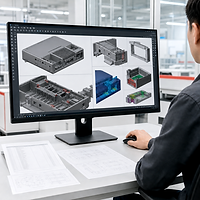
REGULUS performs design analysis, DFM, and testability review for both customer-provided designs and designs developed through our concept-to-design workflow. This stage checks whether the product design can move into prototype build, engineering validation, and manufacturing preparation.
Design File and BOM Review
We review design files and BOM data to confirm whether the information is complete enough for manufacturing evaluation, sourcing preparation, PCB assembly, box build assembly, and testing preparation. This may include Gerber files, schematics, BOM, mechanical drawings, 3D CAD files, assembly drawings, cable drawings, and test requirements. The purpose is to check document completeness, version consistency, BOM accuracy, component availability, and whether assembly and testing requirements are clearly defined. This review focuses on technical information readiness for engineering analysis and manufacturing preparation, not product function analysis.
Electronic and Mechanical Design Analysis
After document readiness is reviewed, we analyze the product design itself. Electronic design analysis may include layout constraints, power and signal arrangement, interface planning, component placement related to function, and module configuration. Mechanical design analysis may include enclosure structure, I/O location, internal space, mounting method, and part alignment. This step confirms whether the design logic fits the product function and physical configuration. It is different from DFM, which focuses on whether the design can be manufactured, assembled, inspected, reworked, and repeated in production.
DFM Review for PCB Assembly and Mechanical Assembly
We perform DFM review to identify design conditions that may affect manufacturability. For PCB assembly, this may include PCB panelization, PCB fabrication constraints, solder mask clearance, component placement for assembly, inspection, and rework. For mechanical assembly, DFM may include tolerance stack-up, fastening method, tooling clearance, assembly sequence, mechanical fit, and the relationship between PCBA, enclosure, connectors, cables, and internal parts. The goal is to reduce avoidable manufacturing issues before the project enters prototype build or trial run.
DFT and Testability Review
We review whether the product can be tested, programmed, and verified in a practical manufacturing environment. This may include test points, programming interface, fixture clearance, functional testing needs, and system-level test requirements. DFM focuses on manufacturability and assembly feasibility. Design for Test (DFT) focuses on whether the product can be tested and validated. Both are important before moving into prototype build, engineering validation, and NPI.
Design Adjustment and Engineering Feedback
When design analysis, DFM, or DFT identifies issues, we convert the findings into engineering feedback and design refinement. This may include PCB layout refinement, component alternatives, mechanical adjustment, connector repositioning, cable routing improvement, or improved testing conditions. The purpose is not only to point out issues, but to prepare the product for a more practical prototype build and a clearer path toward manufacturing preparation.
Prototype Build and Engineering Validation

REGULUS uses prototype build and engineering validation to convert design files, BOM, mechanical structures, and DFM results into physical samples that can be inspected, assembled, tested, and refined. This stage helps your team verify whether the product design is ready for NPI preparation.
Prototype Build for Design Verification
Prototype build is used to validate design assumptions before production. Depending on the project scope, this may include PCBA samples, mechanical samples, enclosure samples, functional prototypes, or assembly prototypes. The prototype is not treated as a production run. It is used to verify electronic design, mechanical design, material selection, assembly conditions, and early manufacturing feasibility before the project moves into trial run or broader production planning.
Electro-Mechanical Integration and Assembly Validation
For products that require box build assembly, we check electro-mechanical integration after prototype samples are built. This step evaluates whether the PCBA, modules, connectors, cables, enclosure parts, fasteners, and internal structures can fit together without interference before the project moves into functional testing, system-level validation, or design refinement. This assembly validation may include checking PCBA mounting position, module-to-PCBA alignment, connector orientation, cable routing space, bend radius, strain relief, screw fastening conditions, internal clearance, and assembly sequence. The goal is to confirm whether the product can be assembled in a stable and repeatable way.
Functional, Mechanical, and System-Level Validation
After prototype assembly and electro-mechanical integration checks, we perform functional and system-level validation based on project requirements. This may include power-on testing, functional testing, programming checks, firmware-related verification when applicable, signal or interface verification, user interface checks, mechanical operation checks, and system-level validation. This step verifies whether the assembled product meets the expected functional behavior, mechanical operation, interface requirements, and system-level conditions. If project requirements call for preliminary reliability or environmental checks, these can be evaluated according to the defined scope.
Engineering Feedback and Design Refinement
Prototype validation identifies design, assembly, sourcing, and testing issues before NPI. We use the validation results to refine circuit design, PCB layout, mechanical parts, cable routing, component selection, testing conditions, or assembly methods. This feedback loop connects engineering validation with manufacturing preparation. It helps your team address practical issues before the project moves into trial run and process validation.
NPI and Manufacturing Preparation

After prototype validation, REGULUS moves the project into New Product Introduction (NPI) and manufacturing preparation by organizing the confirmed design information, BOM data, prototype findings, DFM feedback, test requirements, and assembly methods needed for production planning. This stage prepares the documents, process controls, material plans, quality checkpoints, production schedules, assembly setup, and testing readiness required for controlled and repeatable PCB assembly or box build assembly.
Trial Run and Process Validation
A trial run is a small-batch production activity used to validate the manufacturing process before broader production. It may include validation of the assembly process, testing process, workstation arrangement, manufacturing feedback, and quality checkpoints. Trial run is different from prototype build. Prototype build verifies the design and engineering sample. Trial run verifies whether the manufacturing process, assembly method, test flow, and quality conditions can be repeated in a production environment.
Production Documentation and Quality Checkpoints
Before production, we confirm or establish the documentation and quality checkpoints required for stable manufacturing. This may include BOM finalization, SOPs, work instructions, inspection criteria, test procedures, traceability records, and packaging requirements. These documents help align engineering, sourcing, assembly, testing, inspection, and project management teams. They also reduce ambiguity when a project moves from engineering validation to manufacturing execution.
Manufacturing Preparation for PCB Assembly and Box Build Assembly
Once the trial run, process validation, production documentation, and quality checkpoints are confirmed, we prepare the project for actual manufacturing. This may include material preparation, supplier coordination, production scheduling, work order release, line setup, assembly resource planning, testing resource readiness, packaging preparation, and shipping preparation. If the project includes box build assembly, manufacturing preparation may cover PCBA, mechanical parts, cables, connectors, enclosure parts, labels, final testing, packaging, and shipment preparation. The goal is to prepare the project for controlled and repeatable manufacturing, not to restart design validation.
Common Design and Engineering Issues REGULUS Helps Resolve
REGULUS helps resolve design and engineering issues that may affect product development, prototype validation, NPI, PCB assembly, and box build assembly. These issues can appear in concept-stage projects, existing designs, or products that are being prepared for manufacturing.
Common issues include:
-
Product concepts that need electronic and mechanical design development
-
Early designs that need manufacturing feasibility analysis
-
PCB designs that require adjustment for assembly, inspection, or testing
-
BOMs with unavailable, high-risk, or unclear components
-
Enclosures or internal structures that require custom mechanical design
-
Mechanical parts that need material, process, or tolerance analysis
-
Connectors that are difficult to reach or connect after final assembly
-
Cable harnesses that are too short, too tight, or poorly routed
-
Insufficient space or interface planning for programming, testing, or functional verification
-
Mechanical interference between PCBA, enclosure, battery, display, or internal modules
-
Assembly documentation gaps that may affect production consistency
-
Product concepts or existing designs that need a clearer path to NPI and manufacturing preparation
By addressing these issues before production, we help your team reduce avoidable redesign, improve communication between engineering and manufacturing teams, and create a more reliable path from design to production.
Why Work with REGULUS for Engineering and Design Solutions
REGULUS is a Taiwan-based Electronic Manufacturing Services (EMS) provider that connects electronic design, mechanical design, prototype validation, NPI preparation, PCB assembly, and box build assembly through an integrated engineering-to-manufacturing workflow. We work with customers who need to develop a product from concept, refine an existing design, or prepare a validated design for manufacturing.
Integrated Design, Engineering, and Manufacturing
A design company may focus only on development, while a contract manufacturer may focus only on production. We connect both sides through electronics manufacturing services that consider design feasibility, material selection, assembly method, testing readiness, quality checkpoints, and production preparation.
This integrated EMS workflow helps your team move from electronic engineering and product design into PCB assembly, box build assembly, testing, and manufacturing preparation with fewer gaps between design intent and production execution.
To learn more about our related EMS capabilities, you can review PCB Assembly, Box Build Assembly, EMS Solutions, and Quality Assurance.
Discuss Your Product Concept or Existing Design With REGULUS
If you only have a product concept, start by downloading the Product Survey information and filling in your project information, such as product function, application scenario, size expectations, power needs, target quantity, and schedule. We can review your project stage and define the next step for electronic design, mechanical design, prototype validation, NPI, and manufacturing preparation.
If you already have design files, please also download the Product Survey information and complete the project information first. Then review the documentation list on the Box Build Inquiry page and prepare the available files listed under items 2–7, including assembly information, PCBA documents, mechanical parts and assembly files, inspection instructions, OQC report samples, and packing specifications or drawings. These files help us evaluate whether your project should begin with design analysis, DFM, prototype validation, PCB assembly preparation, or box build assembly preparation.
If you have additional project, technical, or quotation questions, please Contact Us.